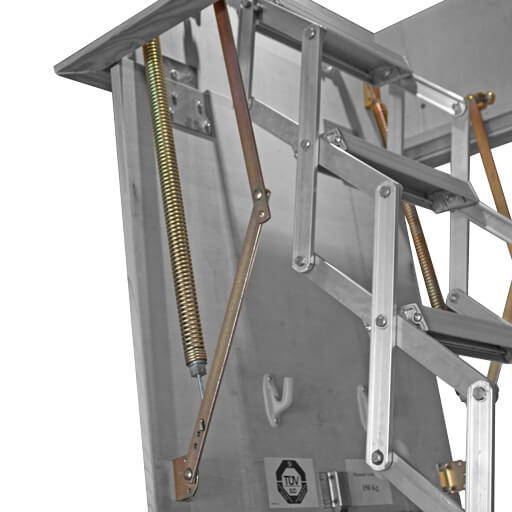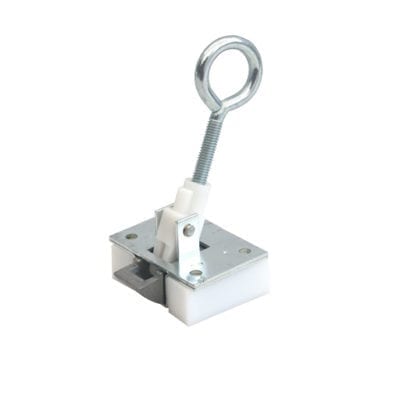

An uninsulated home loses considerable heat through the roof. Especially given the huge increase in gas and electricity prices over the past few years, insulating your loft/attic with a suitable loft hatch could save you hundreds of pounds in energy costs. Furthermore, it is relatively quick and easy to do.
However, the cooler air in an insulated loft can result in draughts through gaps in the insulation, such as an ill-fitting and poorly insulated loft hatch with ladder. The Energy Saving Trust recommend fitting an insulated loft hatch. They also advise you to use draught-excluding seals around its edges to make the hatch airtight.
At Premier Loft Ladders, we offer a range of insulated loft hatches and ladders designed to meet different requirements. This ranges from everyday domestic appliances to projects requiring high levels of energy efficiency and Passivhaus certification.
In this guide, we explain what to look for when choosing an insulated loft hatch and ladder. This includes thermal performance, airtightness and the importance of correct installation.
Here is our guide for helping you find the perfect insulated loft hatch with ladder for your home…

Insulated loft hatch and wooden ladder to keep in the warmth.
How to choose an airtight and insulated loft hatch with ladder
There are three important factors to consider when choosing an insulated loft hatch with ladder:
1. The amount of thermal insulation provided by the loft hatch
Thermal insulation is the reduction of heat transfer through objects of differing temperature. A well-insulated loft hatch therefore reduces the heat loss from the warm room into the cooler loft space above.
But how do you measure thermal insulation? When reviewing all the different insulated loft hatches and ladders that are available on the market, you need to pay attention to the U-value. This is a measure of how much heat is lost through the loft hatch by conduction, convection and radiation. A high U-value indicates high heat-loss. A low U-value indicates low heat-loss. As a bench-mark, a solid wall has a U-Value of approximately 2 W/m2K.
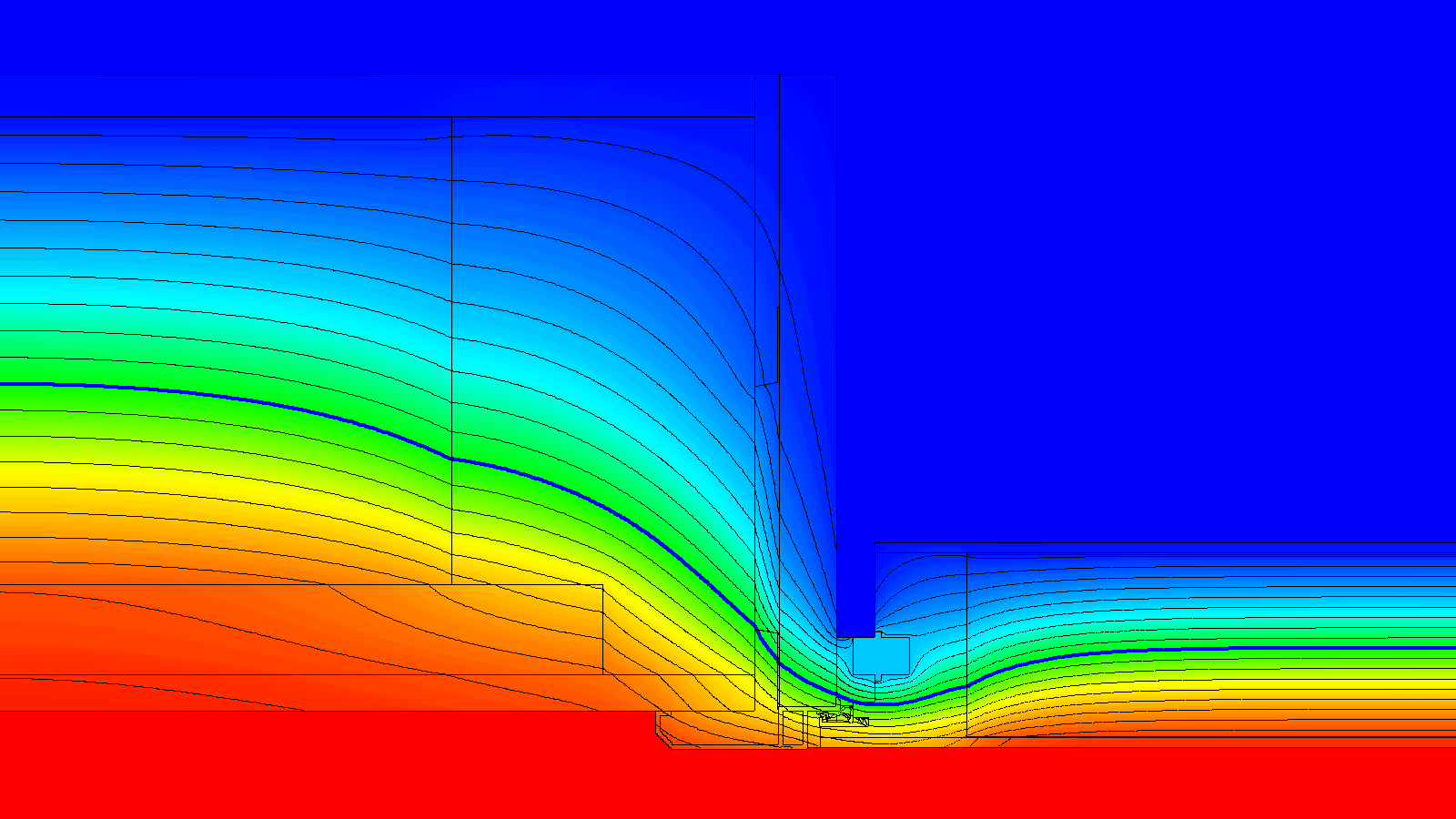
Insulated loft hatch with ladder heat profile. Warmth stays in the room below.
For a well-insulated loft hatch with ladder, you should really be looking for a product offering a U-value of less than 1 W/m2K, however the best insulated loft hatches and ladders on the market boast U-values as low as 0.17 W/m2K (such as the Isotec 200).
When comparing different products, it is important to look beyond general descriptions such as ‘highly-insulated’. Always check the published U-value, and be cautious if there is no U-value listed. Additionally, don’t be afraid to ask where the U-value has come from. Its important to know if it was tested (or perhaps calculated) by a recognised professional institution.
2. Is the loft hatch airtight?
Air permeability of the loft hatch is another important consideration. It relates to the amount of air that will travel through the loft hatch while in its closed position. In other words, is it an airtight loft hatch? An insulated hatch is of little use if the trapdoor does not prevent warm air from escaping through gaps around its edges. This may sound obvious, but not all loft hatches offer a tightly closing sealed door.
The first thing to look for is whether the loft hatch is certified with a Class 4 air permeability rating. Class 4 is the highest rating, so anything certified to this standard is recommended. The other thing to consider is the construction of the trapdoor. A strong, rigid trapdoor, made from durable materials should last the test-of-time and provide an airtight seal for many years of use.
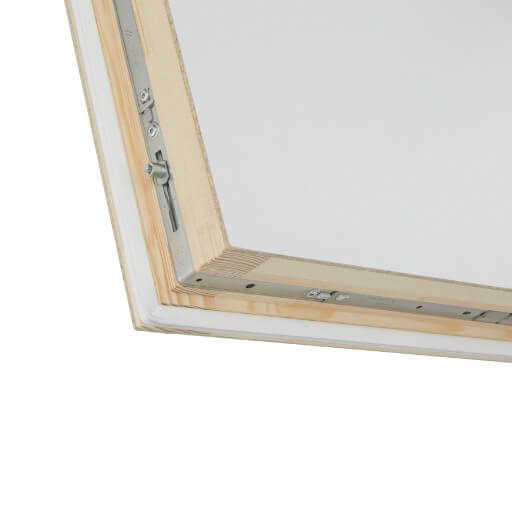
Designo insulated loft hatch with 6-point locking mechanism for an airtight seal
Also consider the number of locking-points on the trapdoor. Modern windows feature multiple locking-points to help ensure a tight and even seal around all its edges. The same applies to an insulated loft hatch with ladder. Consider loft hatches that have multiple locking points. For example, our Designo, Quadro and Ecco loft ladders feature a high quality multi-point locking mechanism for a window-tight seal.
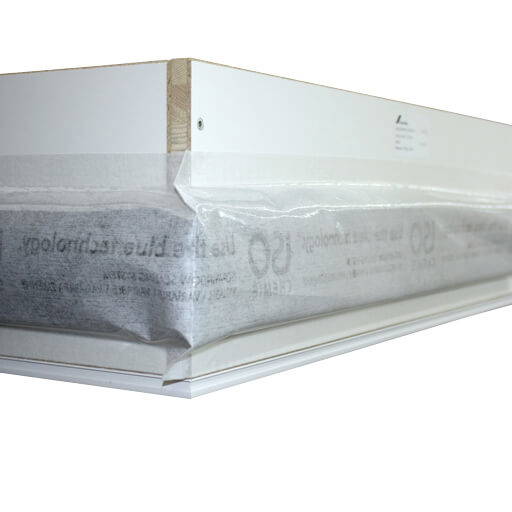
WDL insulation and sealing tape for an airtight connection between the loft ladder hatch box and the building
3. Air permeability around the outside of the hatch box
Now you have a well-insulated and airtight loft ladder hatch. The final challenge is to minimise the amount of air that escapes around the outside of the hatch box. It is therefore important to make sure that you choose a hatch box that fits the size of your ceiling opening. Where possible, choose a made-to-measure loft ladder to ensure a good fit and leaves a sufficient gap between the hatch box and the structural opening. The small gaps around the edges are required to allow for installation tolerances as well as minimise heat transfer through thermal bridging.
Finally, it is important to seal and insulate the gaps around the edge of the loft hatch box. Most of the time this is left to the person fitting the loft hatch, who may use expanding foam or mineral wool. Alternatively, some products are pre-fitted with an insulating and sealing tape (such the Designo and Ecco loft ladders), or airtight sealing kits can be purchased as an accessory for fitting during installation (e.g. Klimatec 160, Isotec and Isotec 200).
Achieving Passive House (Passivhaus) standards of thermal insulation
The factors considered above are essential for projects aiming to achieve Passive House standards. Premier Loft Ladders offer three ladders certified by the Passivhaus Institute:
- The Designo Passive House loft ladder
- The Klimatec 160 Passivhaus Loft Ladder (pictured)
- The LWT Passive House
Also available is a special version of the Designo loft ladder offering U-values as low as 0.28 W/m2K (the Designo DD). This features a secondary upper cover that can be closed after entering the loft. As a result, it helps to lock the warmth in the home and also prevent moist air from flowing into the loft and condensing in the cold areas. Similar insulated upper covers are also available for the Klimatec 160, Isostair and Eurostep.
For further details, please visit our Passive House Applications page.

Passive house certified loft ladder – Klimatec 160.
What is the difference between an insulated loft hatch and ladder and Passive House (Passivhaus) certified loft hatch and ladder?
Insulated loft hatches and ladders are designed to provide very good thermal performance, and help reduce heat transfer between the living space and the loft. They minimise heat-loss and unwanted air leakage.
Passive House certified loft ladders have been independently assessed by the Passivhaus Institute against specific performance requirements. The certification provides additional assurance that the product meets the relevant Passive House criteria. Therefore, these products are great for projects targeting Passivhaus standards.
Both insulated and Passive House loft hatches and ladders contribute to improving energy efficiency within a property. The most appropriate choice will depend on the specific project.
Why not explore our range of loft ladders…
…or contact us to discuss your requirements.
We hope you found this helpful!
If so, please feel free to share this article with family, friends and colleagues so that they can also benefit. Also, why not follow-us on social media for further tips, ideas and the latest product news…